The General Secretariat for Investment (SGPI) has renewed the IHU ICAN (Foundation for Innovation in Cardiometabolism and Nutrition), a university hospital institute selected in the first round (2011), and awarded €7.5 million over three years as part of the France 2030 funding program. This renewal, which follows a positive evaluation by Hcéres, marks a new chapter in the history of the IHU dedicated to combating cardiometabolic diseases and advancing digital medicine.
This recognition honors fifteen years of developing a unique model for a translational research institute based on the generation of data from patient cohorts, expertise in digital tools, and a multidisciplinary community of researchers and clinicians dedicated to the fight against disease and to research aimed at improving patient care.
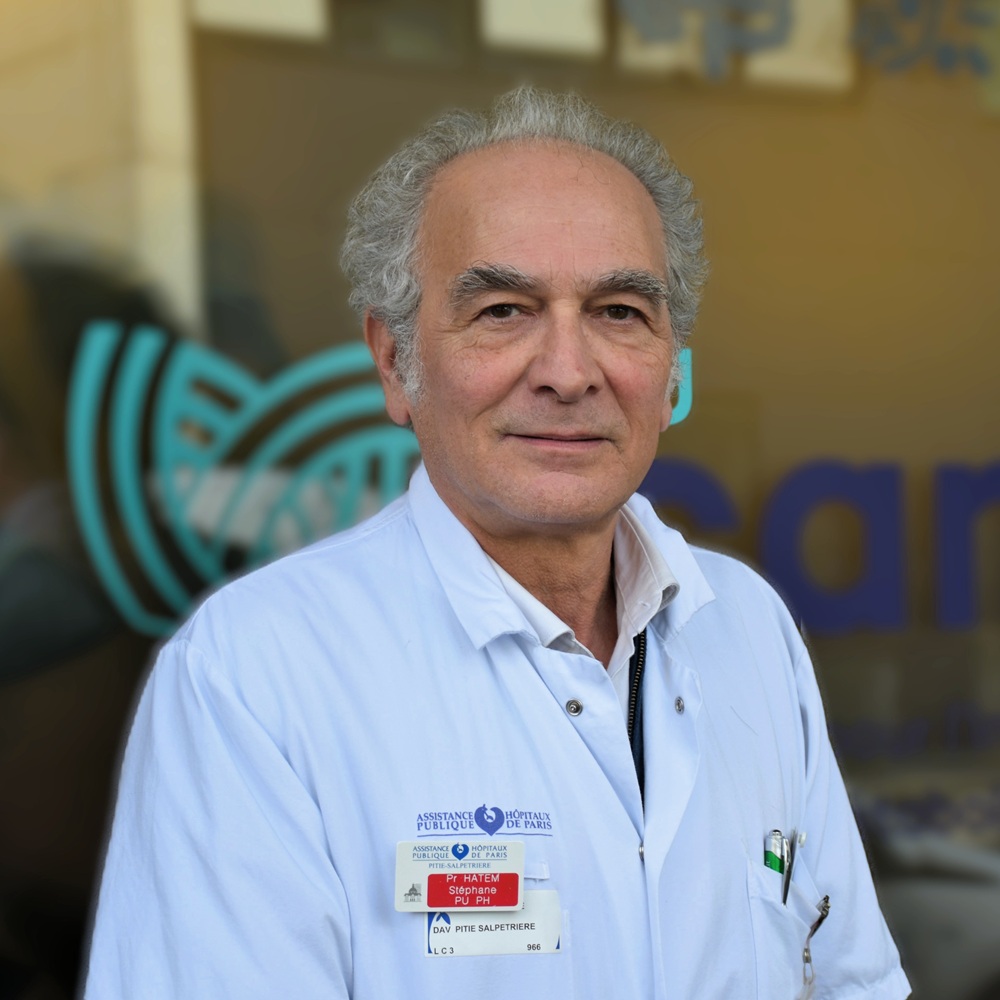
“This renewal reinforces the role that IHU ICAN plays today in the health research landscape. It gives us the mission of transforming this scientific expertise into innovations for personalized prevention and management of cardiometabolic diseases.”
Prof. Stéphane Hatem, Executive Director of the IHU ICAN
The IHU ICAN 2026–2030 Strategic Plan
Diabetes, obesity, metabolic liver diseases, dyslipidemia, cardiovascular diseases, and kidney diseases are closely linked and form part of a true pathophysiological continuum known as cardiometabolic diseases.
In France:
73%
Cardiovascular events are associated with metabolic risk factors that can be modified
4.3 million
people live with diabetes
8.5 million
people are affected by obesity
The IHU ICAN’s Response
In response to this challenge, the IHU ICAN is taking an approach that aims to transcend the boundaries between medical specialties. We need to shift the scale of research to understand the interactions between the organs involved in cardiometabolic diseases and to be able to process and utilize the massive amounts of data derived from clinical care or generated by “omics” with one goal in mind: to develop personalized care for cardiometabolic diseases throughout the lifespan.
3 Scientific Priorities for 2026–2030
1. Strengthen interdisciplinary and translational research on the cardiometabolic continuum
The IHU will continue to facilitate multidisciplinary research by bringing together a community of researchers and physicians to focus on translational research areas such as adipose tissue, liver-heart communication, and the genomics of cardiometabolic diseases.
2. Health Data and Artificial Intelligence as Drivers of Research on Cardiometabolic Diseases
The IHU will strengthen its capacity to create high-resolution databases through its state-of-the-art clinical research and Omics platforms and its patient cohorts. Drawing on its university-hospital ecosystem, these databases will enable the implementation of an innovative research strategy using AI tools in partnership with researchers in biology and physiology.
3. Make prevention and personalized care pathways a new focus of transformation
The IHU will continue to develop multidisciplinary care pathways to improve prevention and early detection of cardiometabolic diseases.
A strategy developed in collaboration with patients

The 2026–2030 strategic plan also marks a greater emphasis on patients within the IHU ICAN.
Patients and organizations will be involved in:
- the development and evaluation of research projects,
- the design of care pathways,
- the development of educational tools
- and training programs.
Strengthening the IHU Model for the Future
The renewal of the IHU is accompanied by a government grant of €7.5 million for the next three years.
This support gives the IHU the visibility it needs to embark on its new strategic cycle while continuing to diversify its other resources. Seeking competitive national and European funding, developing strategic partnerships with stakeholders in health innovation, and accelerating its philanthropy initiative will also help secure funding for its research.
“Our goal is to make the IHU ICAN a leading national institute, capable of bringing together stakeholders in the field of cardiometabolism and accelerating the necessary transformation of our healthcare system.”
Transforming the management of these diseases can only be a collective effort: it must bring together researchers, clinicians, patients, public partners, and healthcare innovators as part of a shared initiative. “The IHU ICAN plays a vital role in making France a hub of innovation and excellence in cardiometabolic medicine.”
Anne-Marie Armantéras, Chair of the Board of Directors of the IHU ICAN

The goal for 2030 is clear: the emergence of cardiometabolic medicine capable of better anticipating disease, taking into account the complexity of interactions between organs, and offering prevention and treatment strategies tailored to each individual’s disease trajectory.