
In 2026, the IHU ICAN held its annual scientific conference for its research community at the Faculty of Sciences of Sorbonne University, with support from GIRCI Île-de-France and in partnership with Boehringer Ingelheim, Novo Nordisk, and Lilly France.
Check out the research projects of the award winners!
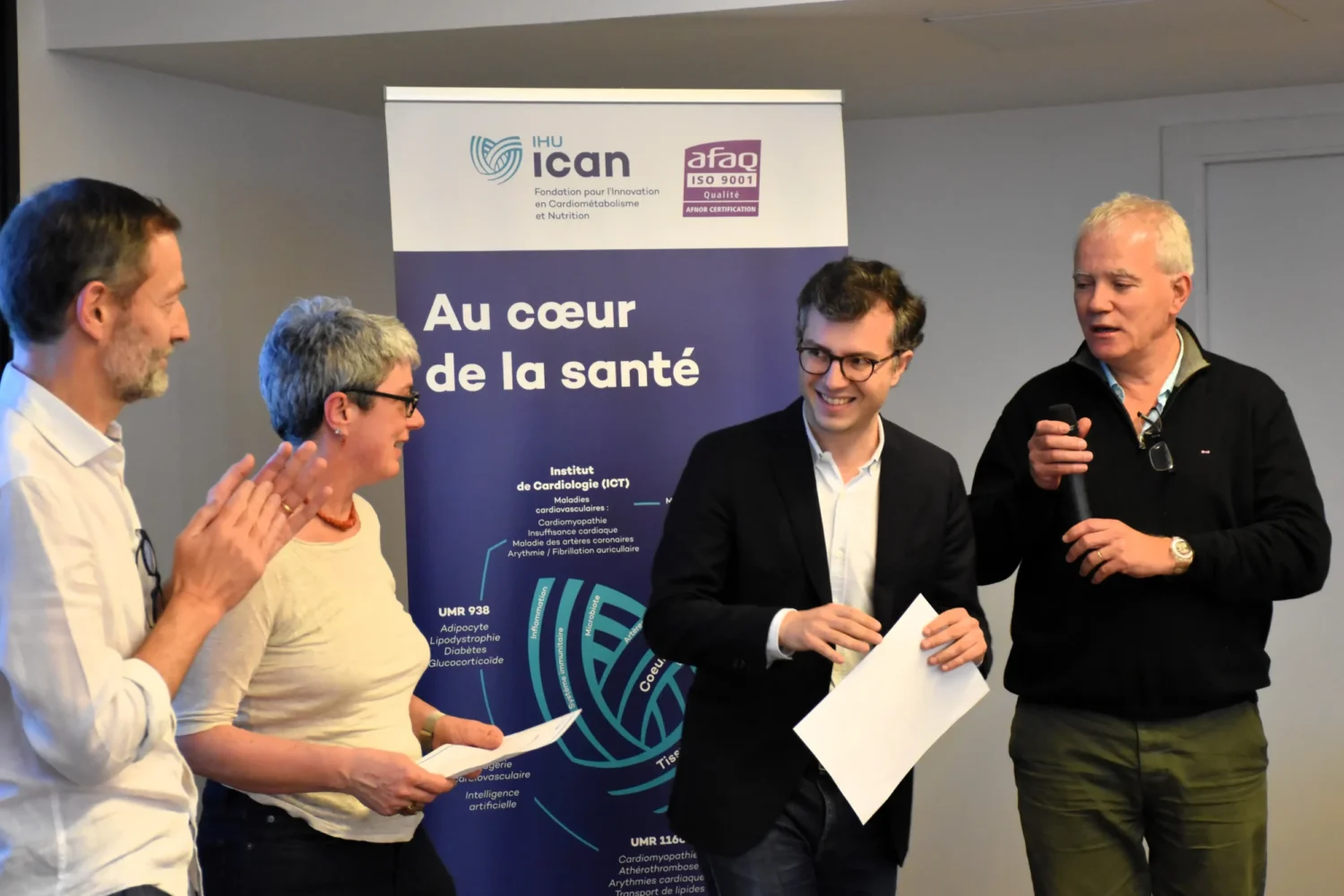
An annual event at the heart of cardiometabolic research
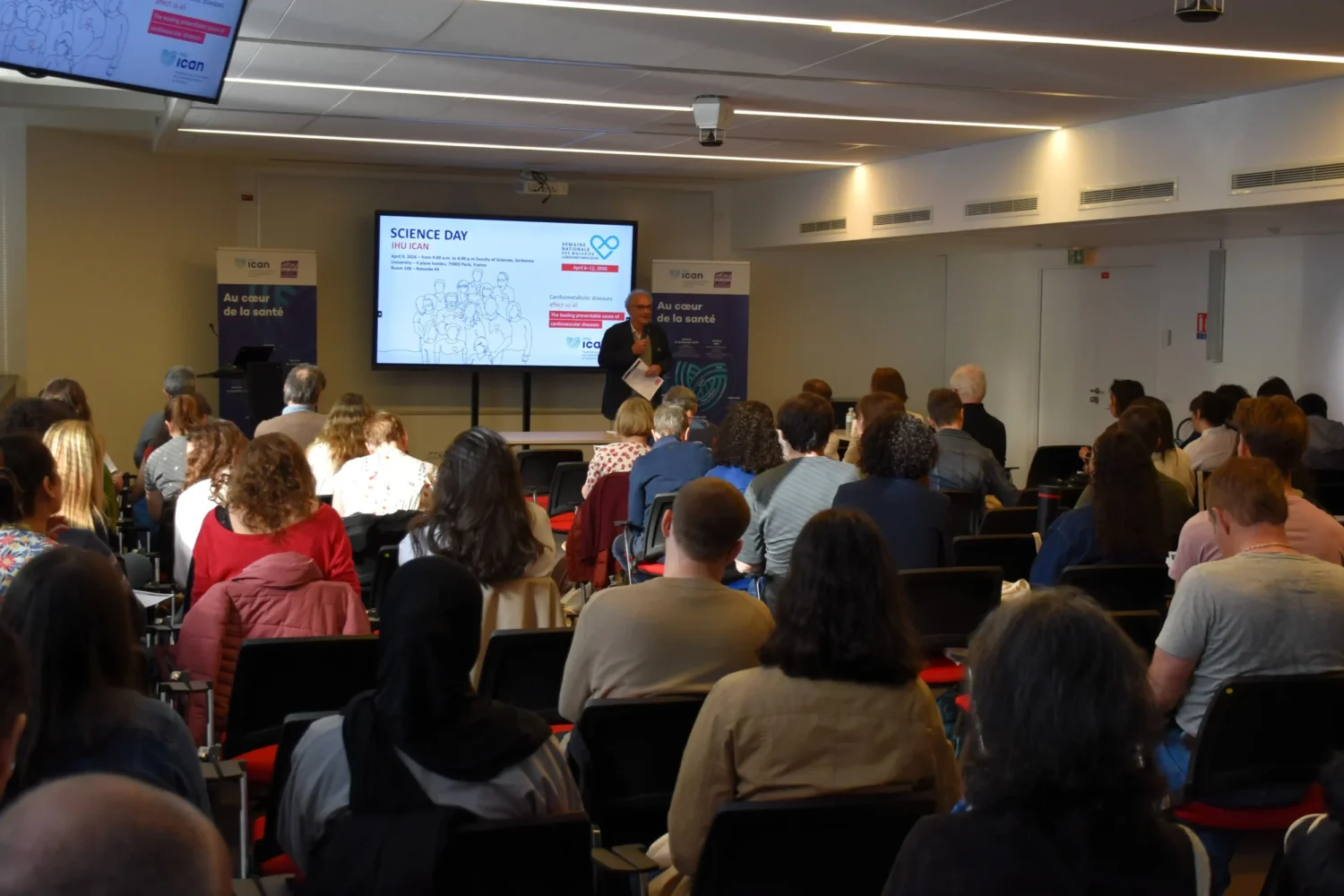
This annual event brings together researchers and clinicians from the IHU ICAN community, as well as experts from our ecosystem, to discuss recent research advances in the field of cardiometabolic diseases.
The goal is to provide a space for knowledge sharing, networking, and showcasing the projects of young researchers.
Discover the winners’ projects
On this occasion, the IHU ICAN recognized four research projects (the two best oral presentations and the two best scientific posters) based on a set of predefined criteria (project impact, appeal, clarity, relevance, originality, scientific quality, quality of the oral presentation, responses to questions, etc.). Congratulations to the winners of the 2026 session!
- Clinical Research Jury: Corinne VIGOUROUX, Laurie SOULAT-DUFOUR, Olivier BLUTEAU
- Basic Research Jury: Elise BALSE, Eric Hajduch, Wilfried LE GOFF
Best Oral Presentations
Clinical Research Award
Matthieu PROUST (Cardiology, Pitié-Salpêtrière)
“From Myocarditis to Inherited Cardiomyopathy: When Inflammation Reveals Genetic Vulnerability”
Matthieu Proust is interested in the links between myocarditis (inflammation of the heart muscle) and hereditary cardiomyopathies, genetic disorders that weaken the heart.
- By studying more than 700 patients treated at the Pitié-Salpêtrière Hospital, he is seeking to better understand the role of genetics, infections, and the immune system in the onset and progression of these diseases.
- His research shows that approximately 13% of patients with myocarditis have a genetic abnormality associated with cardiomyopathy, a proportion that is even higher in cases of recurrence.
- They also reveal that, despite very thorough examinations, the cause of nearly 1 in 2 cases remains unknown today.
Matthieu Proust’s research shows that relapses are more common among people with a family history of heart disease or certain immune disorders. It also shows that forms linked to an infection or an immune system disorder are more closely associated with severe complications, while forms of genetic origin carry an increased risk of heart rhythm disorders.
Matthieu Proust is interested in the links between myocarditis (inflammation of the heart muscle) and hereditary cardiomyopathies, genetic disorders that weaken the heart.
By identifying different patient profiles, this research provides a better understanding of why the disease progresses differently from one person to another.
It also confirms the existence of a continuum between myocarditis and inherited cardiomyopathies, based on common mechanisms.
Ultimately, this project aims to improve diagnosis, better assess the risk of complications, and develop more personalized care for each patient. These advances could contribute to more precise medicine, tailored to each individual’s biological and genetic characteristics.
Basic Research Award
Dounia FARHI (UMRS_1166-ICAN)
“Early-Life Cardiac Remodeling Induced by Maternal Obesity: From Postnatal Maturation to Adult Dysfunction”
Dounia Fahri is studying the effects of maternal obesity on postnatal cardiac development.
- While obesity is affecting an increasing number of women of childbearing age, its long-term impact on the cardiovascular health of their offspring remains poorly understood.
- Using an experimental model, she analyzes how an unfavorable nutritional environment during pregnancy and breastfeeding influences the maturation of the heart after birth.
His research shows that children born to obese mothers initially appear to have better cardiac function early in life. However, this advantage is temporary and gradually gives way to changes in the structure and function of the heart in adulthood. In particular, the study highlights abnormalities in the organization of heart cells, metabolic remodeling, and an abnormal increase in their size.
These changes appear to result from the premature maturation of heart muscle cells, caused by early metabolic stress. In the long term, they could increase the risk of cardiovascular disease in children as they grow into adults.
Dounia Fahri’s research thus contributes to a better understanding of the biological mechanisms through which maternal obesity has a lasting impact on the heart health of future generations.
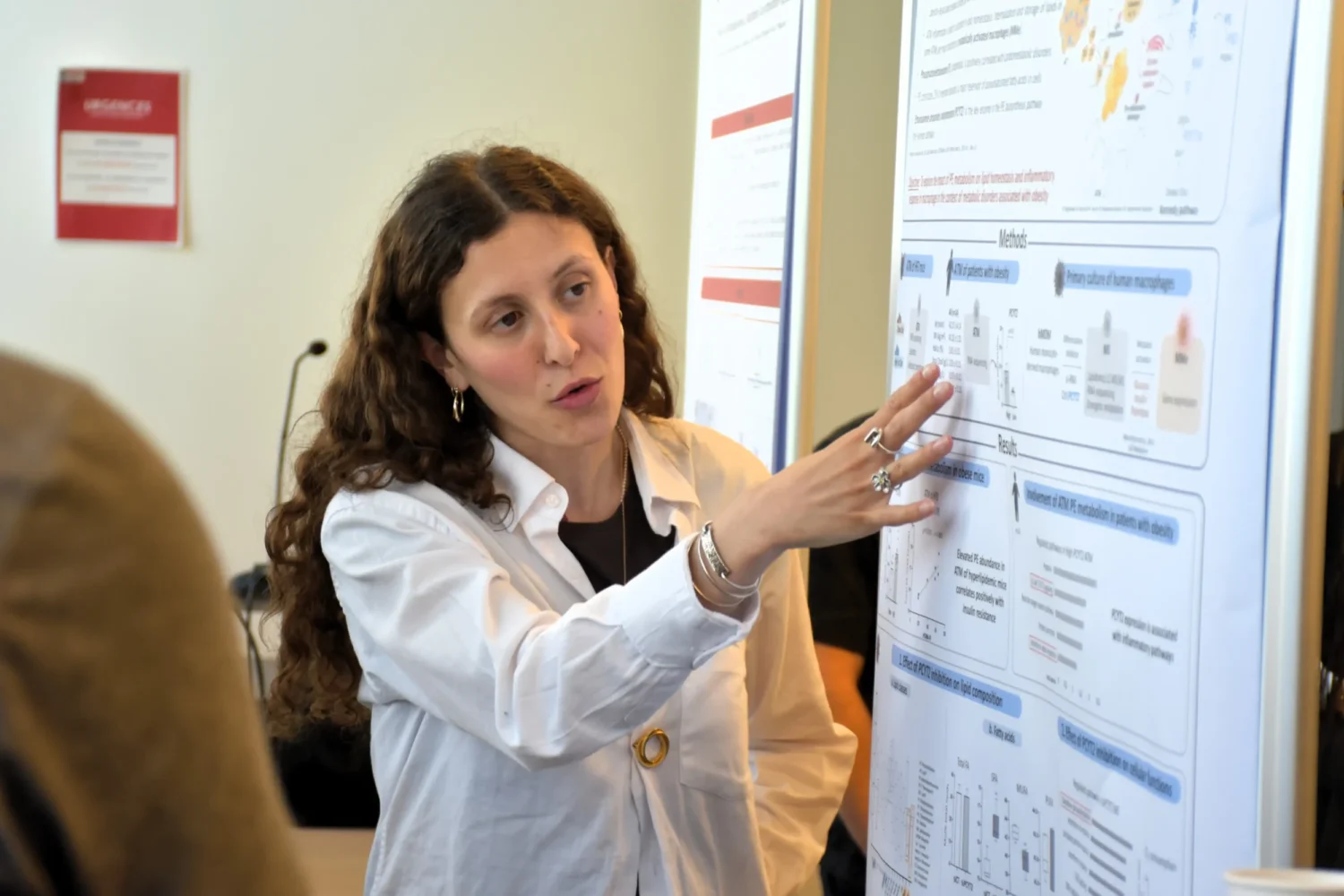
Best Scientific Posters
Basic Research Award
Tom DA SILVA FARIA (Biomedical Imaging Laboratory, LIB)
“An Innovative AI Method for Three-Dimensional Analysis of Aortic Wall Deformation: A Multicenter, Multi-Vendor Evaluation”
Tom Da Silva is developing new artificial intelligence tools to better assess diseases of the aorta, the main artery in the human body. Currently, the risk of complications is primarily estimated based on the diameter of the aorta, an indicator that does not always allow for the identification of the patients at highest risk.
- His project is based on 4D flow MRI, an innovative imaging technique that makes it possible to visualize both the shape of the aorta and the blood flow within it.
- These tests provide a great deal of information about how the artery functions, but analyzing them remains complex and very time-consuming.
Tom Da Silva is therefore developing automated methods that combine image processing and artificial intelligence to simplify this analysis and make it more reliable. In particular, his tools make it possible to automatically identify the aorta, track its movements over time, and evaluate its mechanical properties as well as those of blood flow.
This information could provide a much more accurate picture of the aorta’s health than current tests. The methods developed have been incorporated into open-source software to make them easier for research teams to use. This work will help improve the early identification of patients at high risk for cardiovascular complications.
Clinical Research Award
Lucile DUCOUSSO-BALOUZET (Cardiology, Pitié-Salpêtrière)
“Deep Learning Analysis to Evaluate Right Atrial Volume in Atrial Fibrillation”
Lucile Ducousso-Balouzet is developing artificial intelligence tools to improve the diagnosis of atrial fibrillation, the most common heart rhythm disorder. This condition causes changes in the heart’s right atrium, which are currently time-consuming and complex to assess during ultrasound exams.
His project aims to automate this analysis using artificial intelligence algorithms capable of identifying and accurately measuring this heart chamber. The goal is to quickly obtain reliable and reproducible measurements, while reducing the time required by healthcare professionals.
- This approach would make it easier to detect signs of disease-related cardiac remodeling. It could also help doctors better monitor patients’ progress and tailor their care.
- By making it easier to interpret imaging tests, artificial intelligence could lead to more accurate diagnoses and greater consistency across medical centers.
This research illustrates the potential of new technologies to support cardiologists in their daily practice. It also contributes to the development of more personalized medicine, based on a detailed analysis of imaging data.
“Beyond Ejection Fraction: Unsupervised Clustering-Based Phenotyping of Heart Failure in the EDUSTRA Cohort”
Lucile Ducousso-Balouzet is working to better understand the different forms of heart failure, a disease that affects several million people worldwide. Today, this condition is primarily classified based on the heart’s ability to eject blood, a measure that does not always reflect the full complexity of its function.
His project explores new markers obtained through cardiac ultrasound that can provide a more detailed assessment of the contraction and deformation of the heart muscle.
- Using artificial intelligence methods, it analyzes data from numerous patients to identify profiles with common characteristics. This approach helps reveal subgroups of patients that are not apparent using current classifications.
- A better understanding of these profiles could help explain why patients do not all respond to the disease in the same way.
This research also paves the way for a better assessment of prognosis and response to treatment. It contributes to a more precise understanding of the mechanisms underlying heart failure.
Acknowledgments to Those Involved
The IHU ICAN would like to thank everyone involved in making this year’s event a success, and especially its partners Boehringer Ingelheim, Lilly France, and NovoNordisk; the GIRCI Île-de-France for its invaluable support; and the Faculty of Sciences at Sorbonne University.
Save the date: 2027 Science Day
Are you a member of the IHU ICAN research community? The next IHU ICAN Research Day will take place in April 2027!
If you have any questions: communication@ihuican.org