
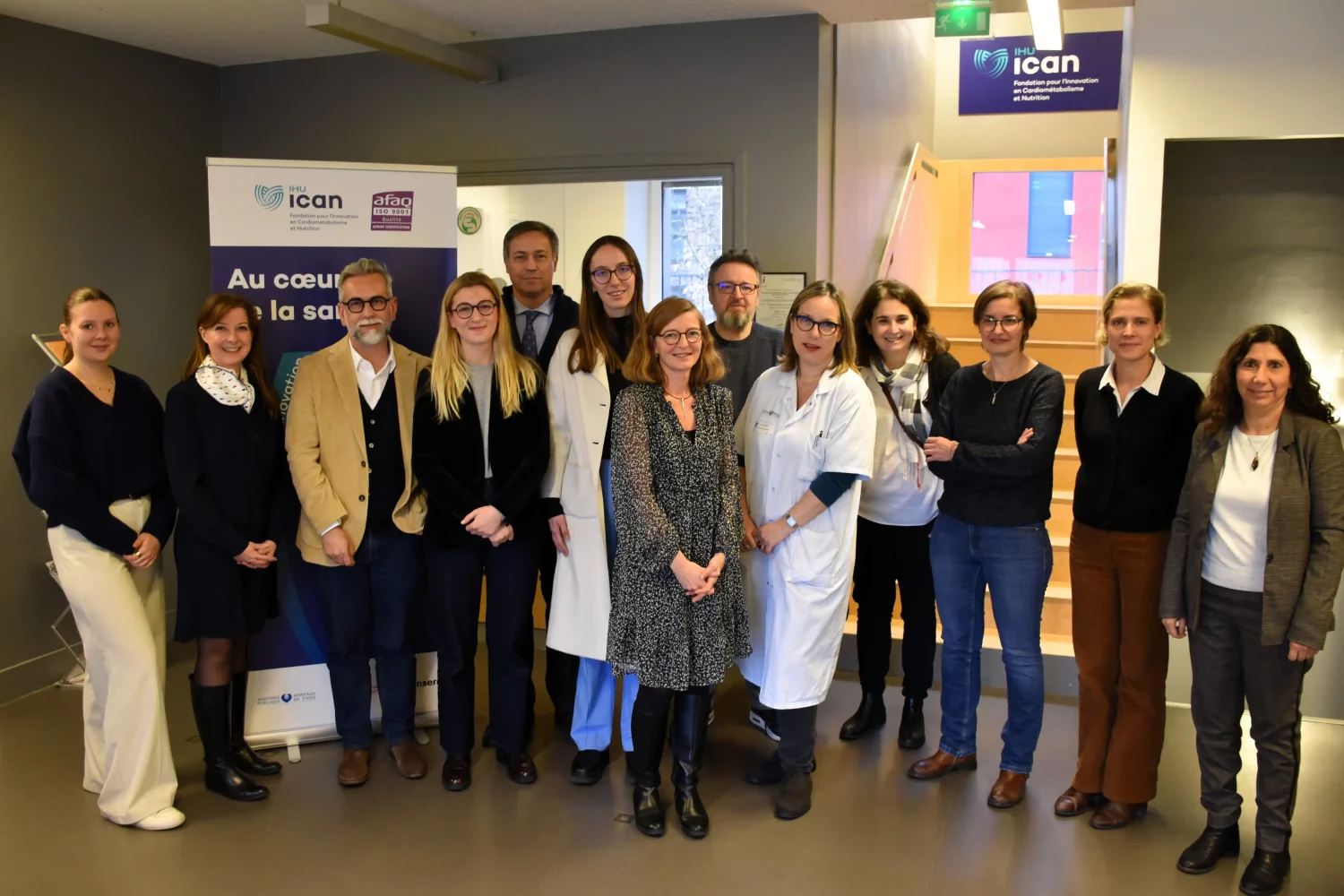
On December 4, 2025, the Crédit Mutuel Alliance Fédérale Foundation and the team from the ICAN (Cardiometabolism and Nutrition University Hospital Institute) met at the Pitié-Salpêtrière Hospital in Paris to formalize a major sponsorship partnership for the EDC-MASLD project. This innovative project aims to understand how endocrine disruptors, which are ubiquitous in our environment (plastics, cosmetics, pesticides), contribute to the development and progression of metabolic liver disease (MASLD), one of the leading causes of chronic liver disease and liver transplantation worldwide.
The EDC-MASLD project: the impact of endocrine disruptors on the development and progression of MASLD
In France, nearly 1 in 5 adults is affected by metabolic liver disease (MASLD), according to estimates by Santé publique France1. Often asymptomatic for a long time, it can progress to fibrosis, cirrhosis, or liver cancer.
- Committed to a fairer and more sustainable society, the Crédit Mutuel Alliance Fédérale Foundation is supporting the EDC-MASLD project over a four-year period.
- This project aims to understand how endocrine disruptors influence the development and progression of metabolic liver disease (MASLD), combining clinical, biological, and imaging data.
- It will enable the mechanisms of action of these pollutants and their effects on the liver to be identified.
- This project draws on a European cohort of more than 9,000 patients to study how environmental pollutants interact with genetic, nutritional, and socioeconomic factors in the onset and progression of metabolic liver disease.
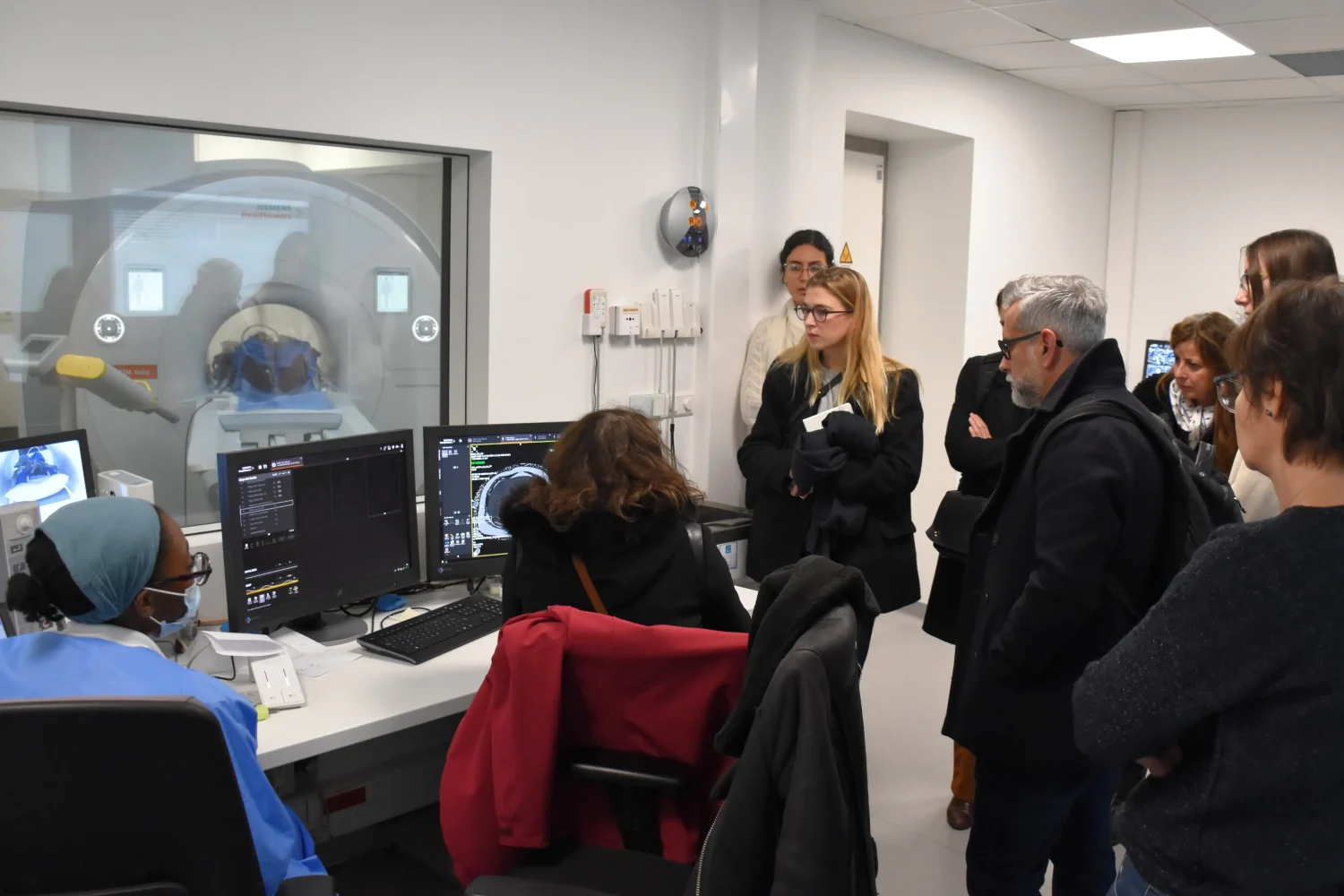
- The support is intended to finance an MRI imaging module dedicated to the study of the liver and the acquisition of MRI images. This equipment is essential for monitoring the progression of liver lesions without resorting to invasive biopsies, with a view to early and individualized treatment.
A partnership for innovation that benefits patients

“Thanks to the new imaging approaches developed in the EDC-MASLD project, we can observe the effects of endocrine disruptors on the liver without resorting to biopsy. This paves the way for earlier screening and a better understanding of the interactions between the environment and metabolism.”
Dr. Vlad Ratziu, hepatologist, gastroenterologist (AP-HP)

“Endocrine disruptors could partly explain the extremely heterogeneous progression of the disease, with some patients experiencing faster and more severe progression of steatosis than others.”
Dr. Raluca Pais, hepatologist-gastroenterologist (AP-HP) and clinician at the ICAN Institute for Research and Treatment of Infectious Diseases

“This partnership with the Crédit Mutuel Alliance Fédérale Foundation demonstrates the need for the business world to mobilize in order to innovate for the benefit of patients.”
Prof. Stéphane Hatem, Director General of the ICAN Institute
A word from our patron
The Crédit Mutuel Alliance Fédérale Foundation supports numerous projects aimed at studying the impact of the environment on health. This is one of its priority areas for sponsorship. It is now estimated that more than 20% of chronic diseases are linked to environmental factors. Medical research is a major challenge for public health, yet it is clear that it is sorely lacking in funding. France has always been a key player in scientific research at the global level, with internationally recognized excellence driven by renowned institutions. It is our responsibility to mobilize the scientific community by supporting projects such as the one led by the IHU ICAN teams, which aims to understand the impact of endocrine disruptors on metabolic liver disease. New technologies enable non-invasive diagnostics for greater patient comfort. Supporting the purchase of cutting-edge equipment is an investment in the future of healthcare and one of the most effective ways to accelerate progress.
Daniel Baal, President of Crédit Mutuel Alliance Fédérale
The entire team at IHU ICAN would like to extend their warmest thanks to the Crédit Mutuel Alliance Fédérale Foundation for their invaluable support for research!
The acquisition of this equipment enables the ICAN IHU to position itself at the forefront of European research in imaging of cardiometabolic diseases linked to liver dysfunction and the links between liver health and the environment.
- Weekly Epidemiological Bulletin, 2022 ↩︎