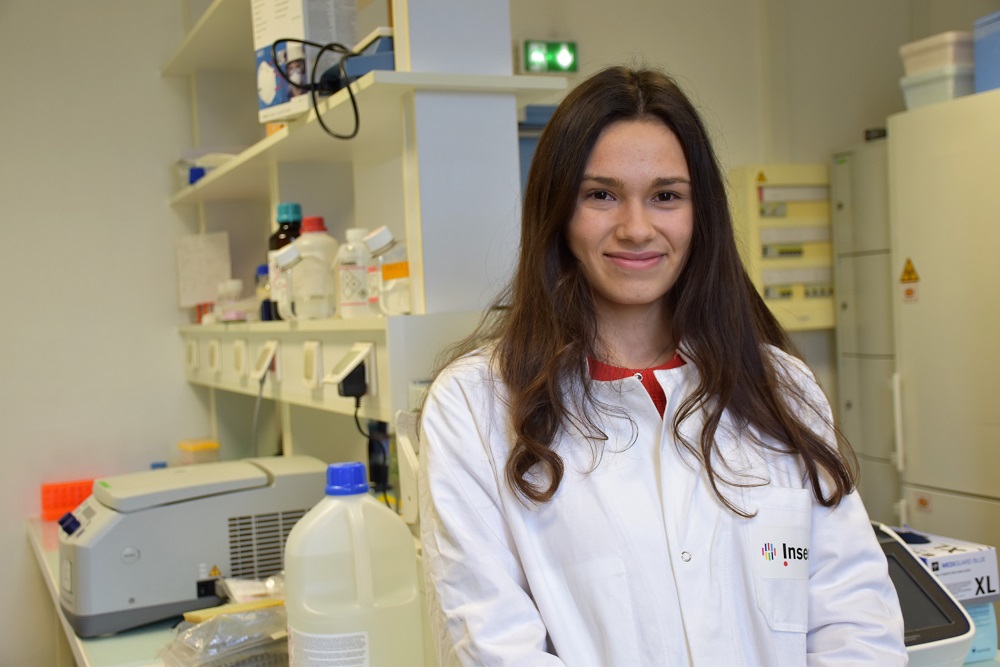
On the occasion of the International Day of Women and Girls in Science organized by UNESCO, we present the research work of Laetitia Rialland, a young PhD student in molecular genetics within UMRS 1166 / IHU ICAN (Pitié-Salpêtrière Hospital).
Laetitia is currently carrying out a PhD project on understanding the genetic causes of human dilated cardiomyopathies (the 1st leading indication for heart transplantation in France and worldwide). She is also a laureate of the Inserm Liliane Bettencourt School.
Awards / Honors
- 2025 : Best oral presentation award – IHU ICAN Scientific Day.
- 2024 : Best Poster Award – Printemps de la Cardiologie
- 2023 : FFC Research Grant [Resp. P. Richard] €100,000
- 2022 : ED39 Ministry PhD Scholarship
- 2020 : Winner of the Inserm Liliane Bettencourt School competition
2018-2022: an early start in scientific research
From a very young age, Laetitia Rialland developed a keen interest in medicine and people-centered professions and in understanding living systems, along with a curiosity for biology. Studying medicine therefore proved an obvious choice, and she joined the Faculty of Medicine at the University of Nantes in 2018.
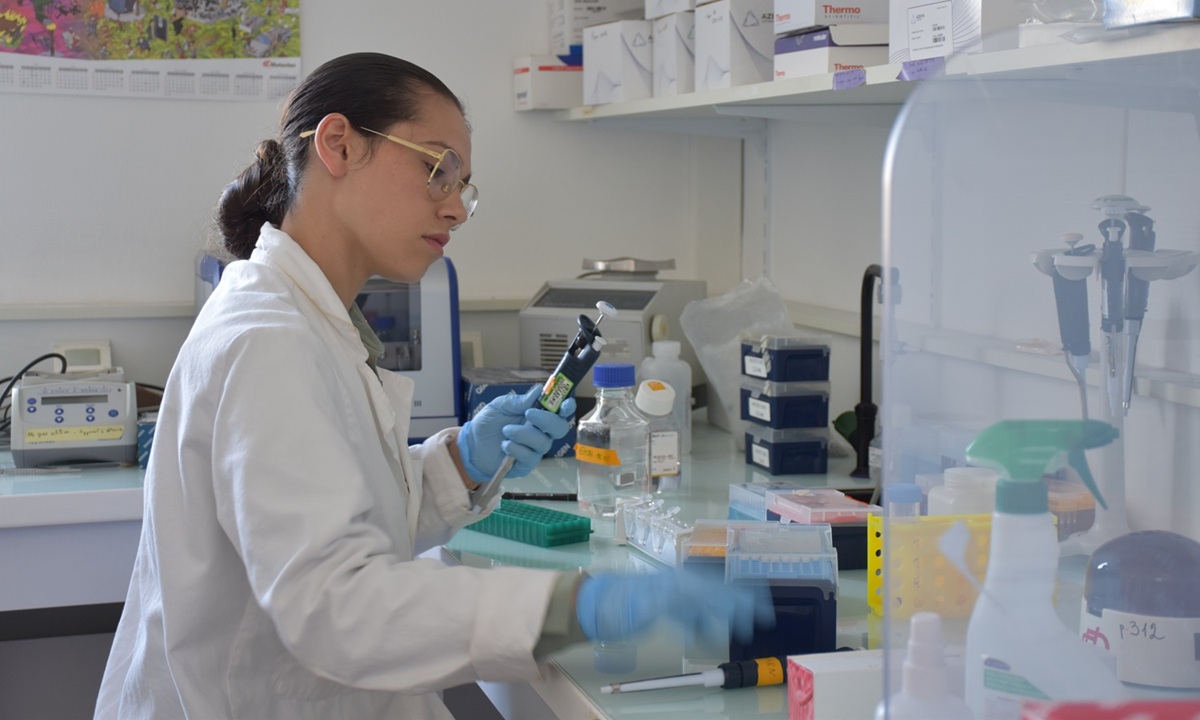
Her first encounter with the research world took place in her 2nd year of medical school when she joined the Inserm Liliane Bettencourt School in 2020. This dual curriculum allowed her to receive early research training, including completing a Master’s degree during which she undertook a 6-month internship (January to July 2022) at the Pitié Salpêtrière University Hospital, in Pascale Richard’s Molecular and Cellular Cardiogenetics and Myogenetics Functional Unit (MD, PhD). This immersion in the scientific environment confirmed her passion for science.
Laetitia : “Analyzing the results is often the most exciting moment, when you discover the culmination of weeks—or even months—of work! It generates many new questions and avenues to explore. It can also be frustrating to have to focus on only some leads, for lack of time. I also appreciate the multidisciplinarity, being at the interface of several fascinating disciplines: genetics, cardiovascular biology, molecular biology, bioinformatics…”
“The investment required is significant: some experiments can last dozens of hours, several days in a row. This intense pace requires great concentration, but the eagerness to discover the fruits of your work strengthens motivation. You have to be patient in the face of unavoidable waiting times and use that time to anticipate future steps and formulate new hypotheses.”
2022-2025: a PhD project focused on cardiomyopathies
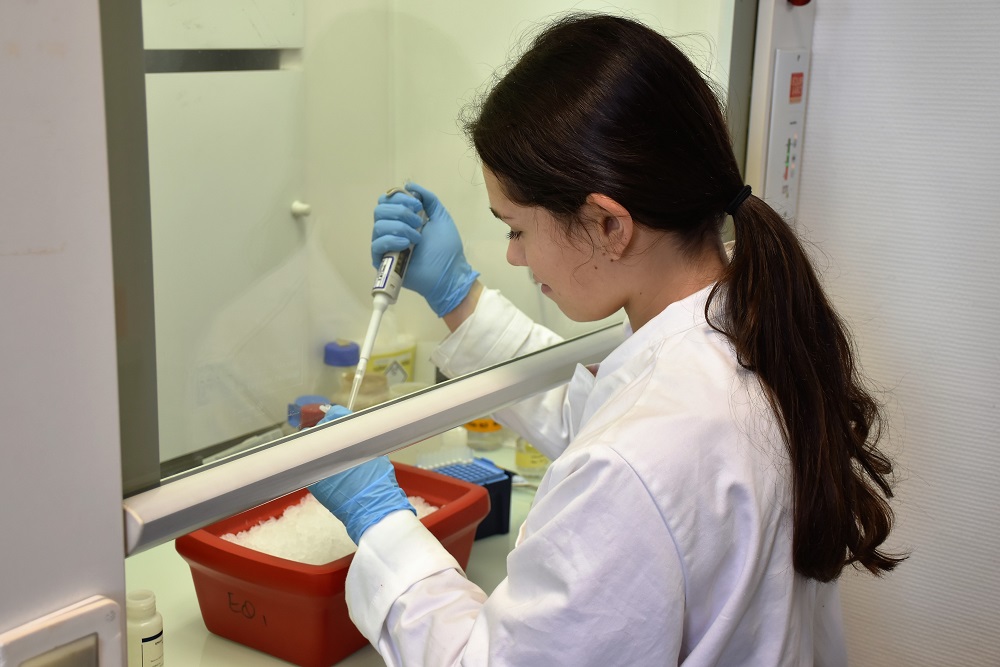
Since October 2022, Laetitia Rialland has chosen to continue along this exciting path by pursuing a PhD entitled “Transcriptional analysis of the genetic causes of human dilated cardiomyopathies” within Team 1 of UMRS 1166 (IHU ICAN).
Her research project, called the Calorr project, is centered on understanding cardiomyopathies, diseases that affect the structure and function of the heart muscle. They most often begin in adolescence or young adulthood, and are the 1st leading indication for heart transplantation (71% of transplants in patients under 40).
Laetitia Rialland is studying an innovative mRNA-seq strategy using third-generation sequencing (Long Read). The goal is to better understand splicing alterations responsible for cardiomyopathies, and then consider defining a new diagnostic panel based on mRNA sequencing that would improve diagnostic yield.
Laetitia : “Thanks to the use of this technology, the Calorr project represents a real opportunity to improve molecular diagnosis, which is essential for proper patient management and treatment. It is important to understand that, to treat a disease, you must understand it and know its origin.
My day-to-day? No two days are the same! I would say that:
- 1/3 of my working time is devoted to “bench” experiments,
- 1/3 to literature research and producing a state-of-the-art review,
- And 1/3 to analyzing results, setting up protocols, training sessions, meetings…
This time allocation will evolve as my PhD progresses, with results analysis taking up an increasingly important share. The final difficulty will be to distinguish variants that cause the disease from benign variants. It’s a major data analysis and comparison effort that will extend over my next 3 years of doctoral work.”
Various stakeholders are involved in the progress of the project, in particular:
- Eric Villard (PhD supervisor) and Phillipe Charron (Team leader, UMRS 1166 / IHU ICAN),
- Pascale Richard for the established diagnostic component (Molecular and Cellular Cardiogenetics and Myogenetics Functional Unit), with whom Laetitia also continues to work on her Master’s research project,
- The UMRS 1166 team,
- The Pitié-Salpêtrière Post-genomics Platform (P3S) for sequencing,
- The ICAN I/O platform for bioinformatics analysis,
- Oxford Nanopore for the use of Long Read sequencing technology.
After 2025: what future in research?
Laetitia : “The genetics of cardiomyopathies is a field that has evolved a great deal:
- In 2001, the first sequencing of the human genome took place after 15 years of work involving hundreds of researchers.
- In 2022, a new record for sequencing the human genome was set at 7 hours and 18 minutes.
Even though this record remains exceptional, it shows that scientific research is constantly improving its technological capabilities. This has made it possible, over the last decades, to discover a large number of genes involved in cardiomyopathies and to considerably improve the management of these patients. In the coming years, we will be able to generate more and more sequencing data, but the challenge will be to succeed in understanding and analyzing all these data.”
After obtaining her PhD, Laetitia would like to resume her medical studies in the 4th year and continue research in parallel with the Inserm Liliane Bettencourt School. She aspires to an academic hospital career in order to share her time between research activity and direct contact with patients.
“This exciting journey requires a lot of work, commitment, and motivation! I encourage all women and girls interested in scientific research to take the plunge. I have encountered no obstacles to being a woman in this environment, and in some disciplines we are even in the majority.”