On March 16, 2026, the IHU ICAN, with support from the Health Data Hub, will launch the ANNITIA Data Challenge, an international competition designed to bring together researchers, data scientists, and clinicians around a common goal: to develop artificial intelligence tools capable of predicting the progression of metabolic fatty liver disease using data from non-invasive tests.
Better predicting liver damage could lead to improved care for patients with non-alcoholic fatty liver disease, which affects about 30% of the global population and is often diagnosed too late because it progresses silently.
This project is funded by Bpifrance’s France 2030 “Health Data Challenges” program.
Metabolic fatty liver disease: a common condition with varied clinical courses

- Nonalcoholic fatty liver disease is a chronic condition characterized by the accumulation of fat in the liver in the presence of metabolic risk factors, and in the absence of secondary causes such as excessive alcohol consumption or the use of certain medications.
- This disease progresses silently, ranging from simple steatosis to a more severe form (metabolic steatohepatitis), which can progress to fibrosis, cirrhosis, and, in some cases, lead to liver cancer.
- The course of the disease depends on the stage of the condition. Patients with isolated steatosis show little progression and have a mortality rate comparable to that of the general population. In contrast, patients with metabolic steatohepatitis are at risk of fibrosis progression.
Affecting approximately 30% of the global adult population, metabolic steatosis represents a major public health challenge: its progression to more severe stages is the leading cause of liver-related mortality. One of the main challenges remains the accurate and early identification of at-risk patients using noninvasive methods, without resorting to liver biopsy.
A need for more granular risk stratification
The identification of at-risk patients relies largely on the assessment of liver fibrosis. However, while biopsy remains the gold standard, its invasive nature limits its widespread use.
Noninvasive tests (NITs) have thus become standard practice in clinical settings. They allow for an initial risk stratification, but their dynamic interpretation remains underutilized.
In this context, artificial intelligence offers new opportunities for analyzing complex longitudinal data and modeling disease trajectories in greater detail.
The objective of the ANNITIA research project
The ANNITIA project aims to develop an approach to stratifying the risk of disease progression based on the simultaneous and longitudinal modeling of various NITs:
- FibroScan® (VCTE)
- The FibroTest
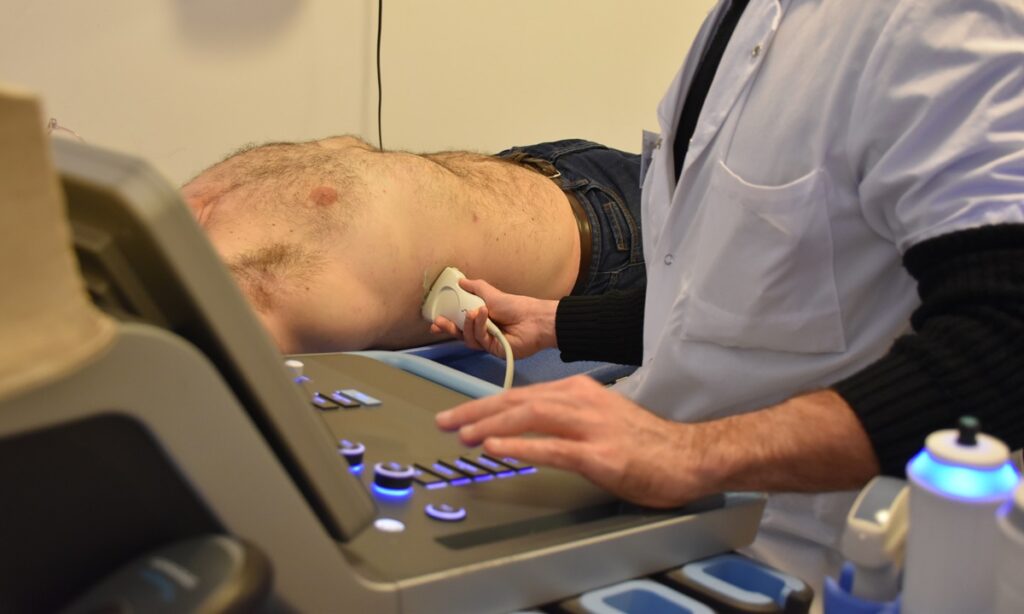
- The Aixplorer
This approach is based on the concept of a “digital twin.” It enables the simulation of a patient’s individual disease progression based on their clinical and biological data. The goal is to better anticipate disease progression and the occurrence of major hepatic events, while providing decision-support tools tailored to clinical practice. This approach is based on the concept of a “digital twin.” It allows for the simulation of a patient’s individual progression based on their clinical and biological data. The goal is to better anticipate disease progression and the occurrence of major hepatic events, while providing decision-support tools tailored to clinical practice.
The Data Challenge: An International Competition in the Service of Science
As part of the ANNITIA Data Challenge, participants will have access to an anonymized database containing clinical data, histological scores, and results from non-invasive tests for nearly 1,700 patients with metabolic liver disease.
- Their mission will be to develop an artificial intelligence model capable of predicting disease progression and improving risk stratification.
- The three winning teams will share a total prize pool of €14,000.
- Their models will be released as open source, thereby contributing to the dissemination of knowledge and the advancement of future research in hepatology.
The Data Challenge launches on March 16, 2026.