The ICAN Institute for Human Health is publishing a booklet for patients with familial hypercholesterolemia!
This monitoring and therapeutic education tool is the result of a multidisciplinary working group at the IHU ICAN, in collaboration with the Lipidology and Cardiovascular Prevention Department at the Pitié-Salpêtrière Hospital and under the supervision of Dr. Antonio Gallo (AP-HP / IHU ICAN).
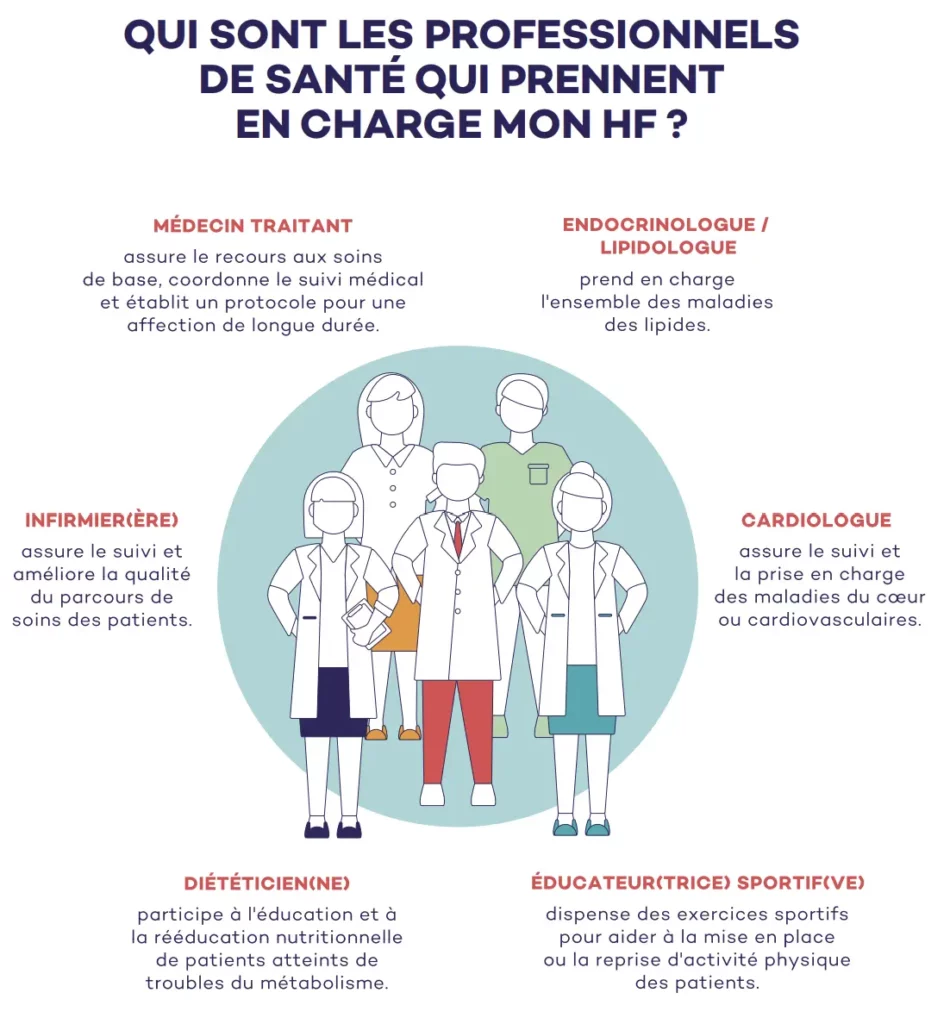
Its goal is to become a reference tool that patients can rely on during visits to doctors and other healthcare professionals, whether in hospitals or private practices.

The team’s message to patients
“How can you live with this chronic disease? We are here to help you answer that question! This journal is yours. It has been designed especially for you, to support you and help you manage your familial hypercholesterolemia. We hope that this journal will become a valuable companion in your daily life, providing you with a personal and confidential space to track your health journey.
Take the time to fill it in with your expectations, questions, and thoughts. It will serve as a reference tool that you can rely on during your visits to doctors and other healthcare professionals, whether at the hospital or in town. Feel free to use it as a way to share important information with your family and friends.
The Lipidology and Cardiovascular Prevention Team – Pitié-Salpêtrière Hospital
In the booklet’s program
- Understanding your condition: causes and symptoms of familial hypercholesterolemia, key figures, screening and treatment, care pathway, and follow-up
- Adapting your lifestyle: general advice on diet, physical activity, tobacco, and alcohol consumption
- Medication management: drug treatments, side effects of treatments (statins, ezetimibe, and PCSK9 inhibitors)
- Research advances and prospects: French Registry of Familial Hypercholesterolemia (REFERCHOL), FHSC registry, HICC registry, Center of Expertise for Rare Dyslipidemias (CEDRA), and research projects at the IHU ICAN
- My personalized follow-up: my contacts, my appointments, my lipid profile and my treatment, directory and useful contacts (in case of emergency, reference centers in France, patient associations)

What is Familial Hypercholesterolemia (FH)?
Familial hypercholesterolemia (or FH) is a disease characterized by elevated LDL cholesterol, or “bad” cholesterol, from birth.
In this case, hypercholesterolemia is not the result of poor lifestyle choices or a poor diet; it is a hereditary family disease with a genetic origin. This disease is transmitted in a “dominant” manner, meaning that of the two copies of each gene (one inherited from the father, one from the mother), only one defective copy is needed for the disease to manifest itself.
Depending on the number of copies of mutated genes, there are two forms of familial hypercholesterolemia:
A homozygous form (rare) associated with LDL cholesterol levels 6 to 8 times higher than normal (between 6 and 12 g/L). This rare form affects 1 in 300,000 people, or approximately 100 people in France.
A heterozygous form (common) associated with LDL cholesterol levels at least twice the normal level (between 1.9 g/L and 4 g/L). One in 300 people are thought to have this form, which equates to almost 300,000 people in France.

More than 90% of those affected are believed to be undiagnosed.
Familial hypercholesterolemia remains too often overlooked: only 10% of those affected are believed to be diagnosed. However, early diagnosis is important in order to treat the disease as soon as possible and prevent cardiovascular complications.
Heterozygous familial hypercholesterolemia (common) is a serious disease that can lead to cardiovascular events in approximately 50% of men before the age of 50 and 30% of women before the age of 60 if left untreated. Even more serious, homozygous familial hypercholesterolemia (rare) can lead to very serious cardiovascular complications such as myocardial infarction or even sudden death before the age of 30 or even in childhood, if left untreated.
Without treatment, the condition of the arteries of patients with familial hypercholesterolemia at the age of 40 would be equivalent to that of people aged 80.
However, a simple blood test is sufficient to screen for familial hypercholesterolemia.
Check out our dedicated booklet to learn more! Read online Download